Course Overview
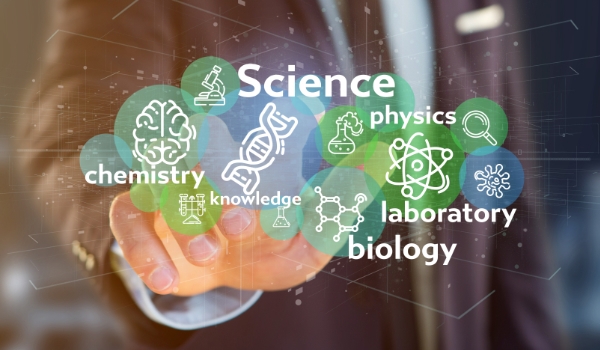
The principles of science manifest themselves in different ways in different domains of science, but a few things remain constant, namely the scientific method. In the scientific method, we look for internal and external inconsistencies in our models, ensuring that our beliefs are coherent within themselves (internal) and with available data (external). Health is an extremely important subject, relevant to each one of us individually and as a society, but is far more subjective than say physics or maths, where we can speak of fundamental laws of the universe that exist independent of us. Principles of health science teach us about the scientific method, but also about ourselves as a species and society, going beyond the natural sciences. Even used in the restricted context of human health, the meaning changes from birth to death, from past to present, and even from culture to culture. This course provided a view of scientific thinking in health from multiple lenses, including physiology, digital technology, medical history, and sociology. I hope that this will serve as a model of how to scientifically analyze ‘wicked’ interdisciplinary topics where neither the questions, nor the answers, are well-defined.
We covered the following topics in the context of health:
- The four paradigms of science: theoretical, experimental, computational simulation driven by theory and experiment, and lastly discovery from big observational data. For example, at different stages of human history, how would we think differently about the risk of tuberculosis?
- The disruptive effect of technologies. For example, how did germ theory and microscopes change the field of infectious diseases and public health
- How to ask a good scientific question. For example, what are the many questions inside “How do we eradicate tuberculosis”?
- Last, but not least, we will talk about how to go about finding an answer for a well stated question.
A sub-theme in this course was the future of health in a digital age, where the fourth paradigm is starting to become operational, disruptive technologies like GenAI are present, but we need to do better in terms of asking the right questions and working across disciplines to answer them.